
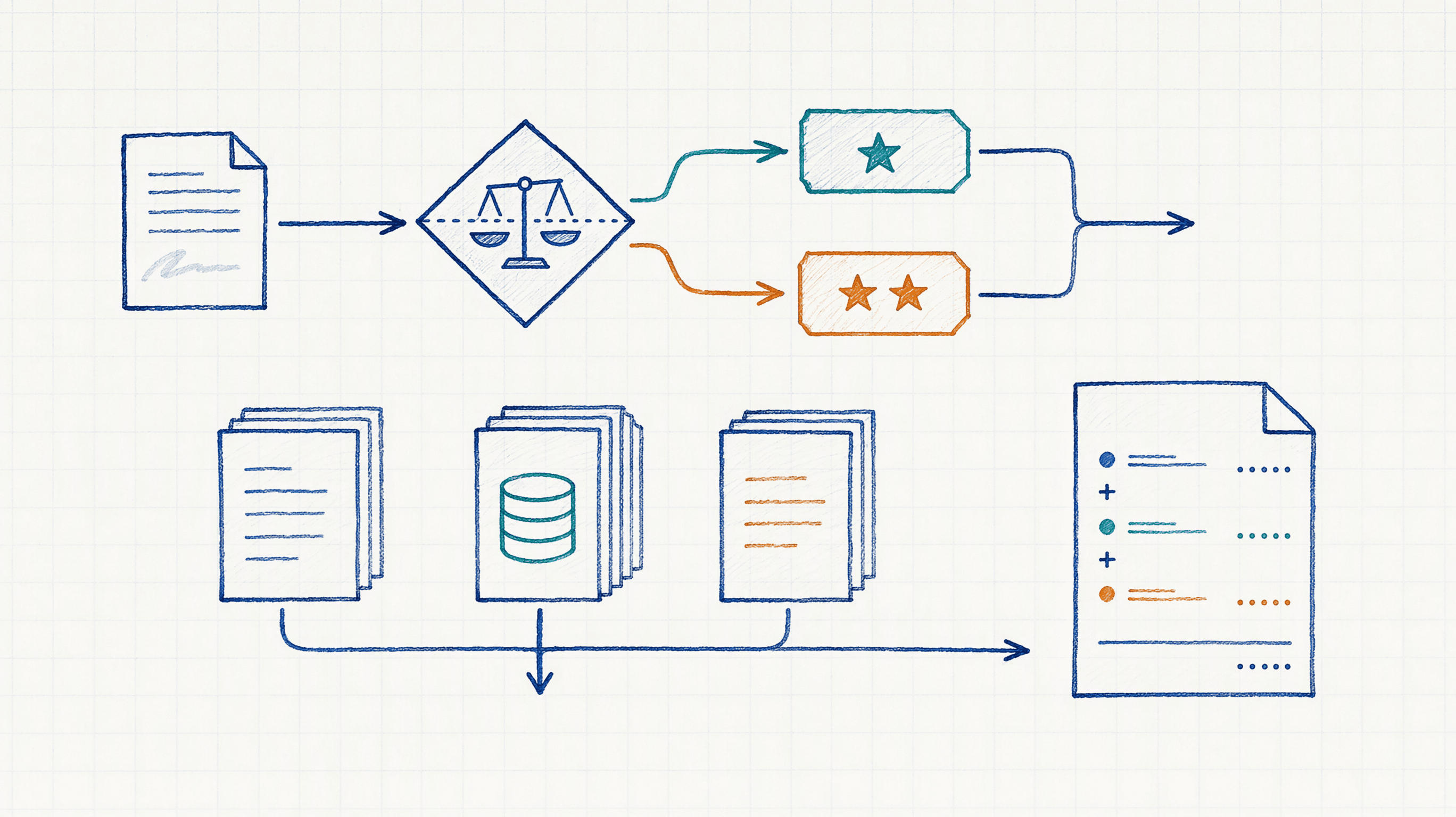
To work out the API cost of Claude Haiku 5.5, first check whether a request's input exceeds 100K tokens. Then calculate regular input, cache writes, cache reads, and output separately. With direct access from Claude, input up to 100K costs $0.10 per million tokens and output costs $0.50. Beyond that threshold, the prices become $0.50 and $2.50.
When you use a third-party channel, convert your budget to that channel's actual quotes. A low-priced model, cache hits, and discounts can't stand in for one another: a cache hit lowers part of the input cost, but it won't turn a request over 100K into a low-tier one.
This article was verified on October 9, 2026. The official rules come from the Claude Platform documentation, and the channel data comes from the AICodeWith console on the same day. All cost examples are hypothetical calculations; no paid requests or real bills were tested. For model capabilities and migrating from earlier versions, see Haiku 5.5 upgrade and coding use cases.
What Is the Current Claude Haiku 5.5 API Price?
The following are Anthropic's official direct prices, in US dollars per million tokens (MTok). The tier is determined by the total prompt input of a single request. Output token count is not used to select the input tier.
| Billing item | Input up to 100K | Input over 100K |
|---|---|---|
| Regular input | $0.10 | $0.50 |
| Output | $0.50 | $2.50 |
| 5-minute cache write | $0.125 | $0.625 |
| 1-hour cache write | $0.20 | $1.00 |
| Cache read | $0.01 | $0.05 |
The 1M context window of Haiku 5.5 indicates capacity; cost is still calculated at the applicable tier. The maximum output for a regular request is 128K tokens, which is also not free usage.Official model specs
When Input Exceeds 100K, How Is the Whole Request Billed?
The official pricing documentation states that prompt length includes all input tokens, including cache reads and cache writes. A request over 100,000 tokens uses the higher-tier rates, even if most of the content hits the cache. Earlier requests keep the prices that applied to them; there is no retroactive increase.Long-context billing rules
The Difference Between 100,000 and 100,001 Tokens
Assuming no caching, with output at 5,000 tokens in every case, and counting only the direct model cost:
| Input per request | Input cost | Output cost | Total |
|---|---|---|---|
| 99,000 tokens | 0.099 × $0.10 = $0.0099 | 0.005 × $0.50 = $0.0025 | $0.0124 |
| 100,000 tokens | 0.1 × $0.10 = $0.01 | 0.005 × $0.50 = $0.0025 | $0.0125 |
| 100,001 tokens | 0.100001 × $0.50 = $0.0500005 | 0.005 × $2.50 = $0.0125 | $0.0625005 |
The third row applies the higher input and output rates to the entire request, not just to the one token over the limit. Input includes everything that counts toward it, such as system instructions, message history, tool definitions, and images. You can't count only the text the user just typed.
A Cache Hit Can Still Land in the Higher Tier
Suppose there are 80,000 cache read tokens, 30,000 regular input tokens, and 5,000 output tokens. Total input is 110,000, so the higher-tier prices apply:
0.08 × $0.05 + 0.03 × $0.50 + 0.005 × $2.50 = $0.0315.
If you pick the tier using only the 30,000 regular input tokens, you'll apply the low price by mistake. Caching changes the billing category of those 80,000 tokens, but the total input length is still 110,000.
How to Calculate the Cost of One Request
Model cost is each billable usage type multiplied by its unit price, then summed. Divide every token count by 1,000,000 first:
模型费用 = 普通输入量 × 输入单价 + 缓存写入量 × 对应写入单价 + 缓存读取量 × 读取单价 + 输出量 × 输出单价.
If you use different cache durations, calculate 5-minute and 1-hour writes separately. Server-side tools with extra charges, taxes, exchange rates, and provider fees are listed separately. An agent task may issue multiple model requests, so total up every round rather than only the last response.
When Caching Saves Money, and What the First Write Costs
The official 5-minute cache write price is 1.25 times regular input, the 1-hour write is 2 times, and reads are one tenth of regular input. The first write carries a cost, and the read price applies only to later valid hits. Sending similar content repeatedly does not mean it hits the cache.Caching pricing and usage notes
Suppose an 80,000-token block of fixed reference material is used repeatedly, and each time you add 20,000 tokens of question and context, with 2,000 tokens of output. Total input each time is exactly 100K, so the official low-tier prices apply:
| Scenario | Calculation | Cost per request |
|---|---|---|
| No caching | 0.1 × $0.10 + 0.002 × $0.50 | $0.011 |
| First request, creating a 5-minute cache | 0.08 × $0.125 + 0.02 × $0.10 + 0.002 × $0.50 | $0.013 |
| Later requests reading a valid cache | 0.08 × $0.01 + 0.02 × $0.10 + 0.002 × $0.50 | $0.0038 |
In this scenario, one first write plus four valid reads totals $0.013 + 4 × $0.0038 = $0.0282; five requests with no caching cost $0.055. This holds only if the reference prefix matches exactly, the cache stays valid, and there are no extra writes. If you change the fixed material, the cache expires, or the context keeps growing, recalculate.
What Batch and Thinking Change in Your Costs
The official Claude Batch API offers a 50% discount on input and output. The Batch regular input / output rates for Haiku 5.5 are $0.05 / $0.25 up to 100K and $0.25 / $1.25 above 100K. It suits tasks that can finish asynchronously, and it should not be applied to regular real-time Messages requests.Official Batch pricing
For example, with 20,000 regular input tokens and 2,000 output tokens, the regular direct cost is 0.02 × $0.10 + 0.002 × $0.50 = $0.003; the same billable usage through the official Batch API costs $0.0015. This is only a comparison of model token costs. You can't conclude from it that any particular gateway also offers a Batch discount.
Haiku 5.5 has adaptive thinking enabled by default. Thinking output counts against the output budget, so the final visible answer may be only part of it. When estimating output cost, use the output_tokens reported by the API rather than counting only the answer text. After you change effort, observe output usage again. For the related behavior, see the official model overview and migration guide.
Turning Channel Discounts into a Real Budget
When you connect through an API relay that supports multiple models, use your own channel's quote rather than applying the official direct discounts. The following are the prices in US dollars per million tokens shown on the verification date in AICodeWith Haiku 5.5 model details:
| Channel | Input | Output | Cache read | Cache write |
|---|---|---|---|---|
| Third-party Claude (3.9x discount) | $0.039 | $0.195 | $0.0039 | $0.0488 |
| Special-price channel (1.9x discount) | $0.019 | $0.095 | $0.0019 | $0.0238 |
| Enterprise mixed pool (6.5x discount) | $0.065 | $0.325 | $0.0065 | $0.0813 |
The lowest displayed price in the model list comes from the special-price channel. The three channels do not share one unit price, and the cache write column keeps the page's display rounding.
The page doesn't list tiered channel pricing above 100K, separate cache write durations, or Batch contracts, so I won't derive a full long-context price list for those channels here. Before sending a large request, confirm which rates apply on your target channel. The examples below only use the listed page prices to walk through a short-request budget.
The same short request on three channels
Assume one request with 20,000 regular input tokens and 2,000 output tokens, with no caching and no extra tool fees:
| Channel | Per-request calculation | Cost per request | 1,000 requests with the same billed usage |
|---|---|---|---|
| Third-party claude | 0.02 × $0.039 + 0.002 × $0.195 | $0.00117 | $1.17 |
| Discount channel | 0.02 × $0.019 + 0.002 × $0.095 | $0.00057 | $0.57 |
| Enterprise mixed pool | 0.02 × $0.065 + 0.002 × $0.325 | $0.00195 | $1.95 |
These figures are calculated only from the prices listed on the verification date. They don't account for retries or promotional changes. A discount doesn't prove that a channel offers better quality, latency, or long-term availability.
How to reconcile your bill with usage and avoid double counting
In the Claude Messages API, input_tokens refers to input that wasn't used for cache creation or cache reads. Don't treat it as the total size of the whole prompt. The official caching docs give the total input as:
总输入 = input_tokens + cache_creation_input_tokens + cache_read_input_tokens.
Use this total to decide which 100K tier applies, then price the three input types separately. If you use two cache write durations, split them using the breakdown returned in cache_creation. Don't multiply the total input by the regular input price and then add the cache price on top, or you'll be billed twice for the same tokens.
The following usage example is made up and is not an actual API response:
| Field | Assumed usage | How to price it |
|---|---|---|
| input_tokens | 10,000 | Regular input rate |
| cache_creation_input_tokens | 0 | No cache writes in this request |
| cache_read_input_tokens | 80,000 | Cache read rate |
| output_tokens | 2,000 | Output rate, using the value reported by the API |
Total input is 90,000 tokens. Estimated at the discount channel's listed prices:0.01 × $0.019 + 0.08 × $0.0019 + 0.002 × $0.095 = $0.000532. This request doesn't include the write cost of any cache built earlier.
When reconciling an actual bill, save the request time, model ID, actual channel, usage, and charged amount, then compare them line by line. A gateway may have its own fields or billing records, so check how it defines them. Don't assume that every API's input_tokens has the same semantics as native Claude.
Conclusion
You can calculate a Haiku 5.5 budget in a clear order: first determine the call path and channel, then add up all input to determine the tier, and finally price regular input, cache writes, cache reads, and output separately. For official requests above 100K, the whole request moves into the higher-priced tier. A cache hit doesn't change the total input length.
Before building a formal budget, pick one task with clear acceptance criteria and record the usage and charges across the full request chain. The examples in this article are useful for checking the formula, but your actual monthly cost also needs to include retries, tools, and the extra spend from cache invalidation.
FAQ
Is the Haiku 5.5 API billed monthly or by usage?
This article covers an API billed by model tokens and related service fees. A Claude web subscription, a platform top-up balance, and a given API channel are different products, so don't convert a monthly subscription fee directly into a fixed token quota.
If input is exactly 100K, does the output trigger the higher tier?
The official pricing picks the tier based on total prompt input. Input of exactly 100,000 tokens falls in the lower tier, and output is billed at that tier's output rate. Cache reads and writes also count toward total input.
Does output get a discount after a cache hit?
A cache hit only changes the billing category of the corresponding input. Output still has its own unit price, and cache creation has its own write fee.
Can the lowest price in the console be used for every channel and long request?
No. The lowest listed price applies to a specific channel. Long-context pricing, cache durations, and Batch conditions that the detail page doesn't spell out should be confirmed separately. Don't fill them in by applying the discount yourself.
Does moving from Haiku 4.5 to 5.5 always cut costs by 90%?
A unit price ratio doesn't directly translate into task-level savings. The new tokenizer changes token counts, and thinking, retries, and requests crossing tiers also change the total cost. Re-measure the billed usage for the same task.
Sources and further reading
- Official Claude API pricing: standard pricing, long-context rules, and Batch rules.
- Official Haiku 5.5 model overview: specs, rates, and default thinking behavior.
- Official Claude prompt caching docs: writes, reads, durations, and usage fields.
- Official Haiku 5.5 migration guide: tokenizer changes, thinking, and output parsing.
- Haiku 5.5 upgrade, coding use, and migration notes: deciding whether it fits your current task.