On October 13, 2026, Google made Gemini 4 Argon generally available. Developers and enterprises can use it through the paid tier of the Gemini API, and subscribers can use it in the Gemini app, AI Mode in Search, and Google Antigravity. Promotional pricing is $2 per million input tokens and $10 per million output tokens (through November 30, 2026), then returns to $4 and $20 on December 1.
If you mostly write code in Claude Code or Codex, this article answers three questions: where Argon is actually strong, whether there is any basis for the "nerfed" claim, and how to compare it with Claude Opus 5.5 in the same workflow today. All benchmark scores here are vendor-published. We have not reproduced them independently.
Quick answer: what is confirmed so far?
| Question | Answer | Source |
|---|---|---|
| Is it released? | Generally available since 2026-10-13 (previously restricted to cybersecurity defenders through the Fairwind Program) | |
| Model ID | gemini-4-argon (stable) | Gemini API docs |
| Pricing | $2 input / $10 output per million tokens through 2026-11-30; $4 / $20 after that | Gemini API pricing page |
| Context window | 1,048,576 tokens, shared across input, thinking, and output | Gemini API docs |
| Max output | 65,536 by default; up to 1M minus input with long decoding enabled | Gemini API docs |
| Free to use? | No. Neither the free tier nor Google AI Pro plans include API access | Gemini API pricing page |
| Callable on AICodeWith? | As of 2026-10-15, the model page does not yet list Argon; Claude Opus 5.5 is available | AICodeWith |
Official timeline
| Date | Event | Notes |
|---|---|---|
| Early October 2026 | Limited access | Reported by Jiqizhixin. Initially available to cybersecurity defenders through the Fairwind Program, then gradually opened to API customers and Ultra subscribers |
| 2026-10-13 | General availability | Announced on the official Google blog as available to developers, enterprises, and subscribers worldwide, along with the promotional pricing |
| 2026-11-30 | Promotion ends | After that, $4 input and $20 output per million tokens |
Gemini 4 Argon pricing: half price during the promotion, then the same as Opus 5.5
| Per million tokens (USD) | Argon through 11-30 | Argon from 12-01 | Claude Opus 5.5 |
|---|---|---|---|
| Input | $2.00 | $4.00 | $4.00 |
| Output (including thinking tokens) | $10.00 | $20.00 | $20.00 |
| Cache read | $0.10 | $0.20 | $0.20 |
One detail many reports leave out: going by official token list prices alone, from December 1, Argon and Opus 5.5 have identical input, output, and cache-read pricing. The real cost difference comes from thinking-token usage, cache hit rate, and how often a task passes on the first try, so it is best to measure on your own tasks. Argon supports implicit caching only, not explicit caching.
To see Opus 5.5's actual billing on AICodeWith, open the pricing page or the model price list.
Gemini 4 Argon vs Claude Opus 5.5: specs compared
| Dimension | Gemini 4 Argon | Claude Opus 5.5 |
|---|---|---|
| Model ID | gemini-4-argon | claude-opus-5-5 |
| Context window | 1,048,576 (shared across input/thinking/output) | 1M |
| Max output | 65,536 default / up to about 1M with long decoding | 128K (300K in Batch API beta) |
| Input modalities | Text, images, video, audio, PDF | Text, images |
| Thinking control | low / medium / high, default medium | Adaptive (always on), default effort medium |
| Knowledge cutoff | Not stated officially | June 2026 |
Note that Argon's 1M window is shared between input and output: the longer the input, the less room is left for output. Gemini 3 and 2.5 give you 1M of input and 64K of output as two separate quotas.
Benchmarks: where Argon wins and where it loses
All figures below come from the Google DeepMind model card (October 2026):
| Benchmark | Gemini 4 Argon | Claude Opus 5.5 |
|---|---|---|
| DeepSWE v1.1 | 77.9% | 74.2% |
| FrontierSWE v2 | 55.0% | 62.3% |
| Vibe Code Bench | 91.9% | 90.3% |
| Terminal-bench 4.0 | 57.4% | 66.4% |
| PostTrainBench | 45.3% | 49.3% |
| Vals Index | 68.9% | 67.0% |
| GraphWalks 256k–1M (BFS F1) | 84.2% | 66.8% |
| LVBench (video) | 91.7% | 83.7% |
| CWE-bench v1 | 68.0% | 67.0% |
For people who code with AI, the takeaway is straightforward: Opus 5.5 still leads on long-horizon terminal coding (Terminal-bench 4.0, FrontierSWE v2). Argon's edge is in ultra-long context, video understanding, and knowledge-work agents. Even among the four agentic coding benchmarks Google picked itself, Argon wins only two.
Is there any basis for the "nerfed" claim?
So far, there is no evidence that Argon was downgraded after launch. The real dispute is that benchmark scores don't match real-world experience:
- Techzine, citing Bloomberg, reports that some Google employees say Argon doesn't perform as well in real coding and front-end design as its benchmark scores suggest. Critics call this benchmaxxing (this is secondhand).
- Google responded that the claim is inaccurate. The figures in its official blog: after adopting Argon in Antigravity, agent code submissions rose by more than 35% and rollbacks dropped by nearly a third.
- The public version of Argon ships with cybersecurity guardrails, while Fairwind members can apply for a version without them. If the public version refuses more security-related requests, that is by design, not a downgrade.
Which access route should you use?
Direct from Google: Enable the Gemini API paid tier in Google AI Studio and set the model to gemini-4-argon. This is currently the official route confirmed to work with Argon.
Claude Code: Claude Code uses the Anthropic protocol, and there is no official way to switch it directly to a Gemini model. For comparisons in Claude Code, use Opus 5.5 as the baseline. For setup, see Claude Code third-party API setup guide.
Codex: Codex can connect to other models through a custom Provider. For setup steps, see Codex API Key setup guide. We have not verified whether Argon works directly in Codex, so we are not providing an untested configuration here.
AICodeWith API: As of 2026-10-15, Argon is not live yet, while Opus 5.5 and the Gemini 3.x series are already available. We'll update this article once Argon launches.
Sign up for AICodeWith and establish a baseline with Opus 5.5 →
Step-by-step tutorial: Put the Opus 5.5 baseline and Argon in the same evaluation
- Sign up: Open the sign-up page to finish registration and get into the console.
- Create an API key: Follow the key creation docs to create a new key under "Key Management", then copy it and store it in a password manager.
- Configure Claude Code or Codex: For Claude Code, see the Claude Code CLI docs. For Codex, see the Codex CLI docs. Set the model to
claude-opus-5-5. - Prepare Argon: Enable a paid tier in Google AI Studio, get a Gemini API key, and set the model to
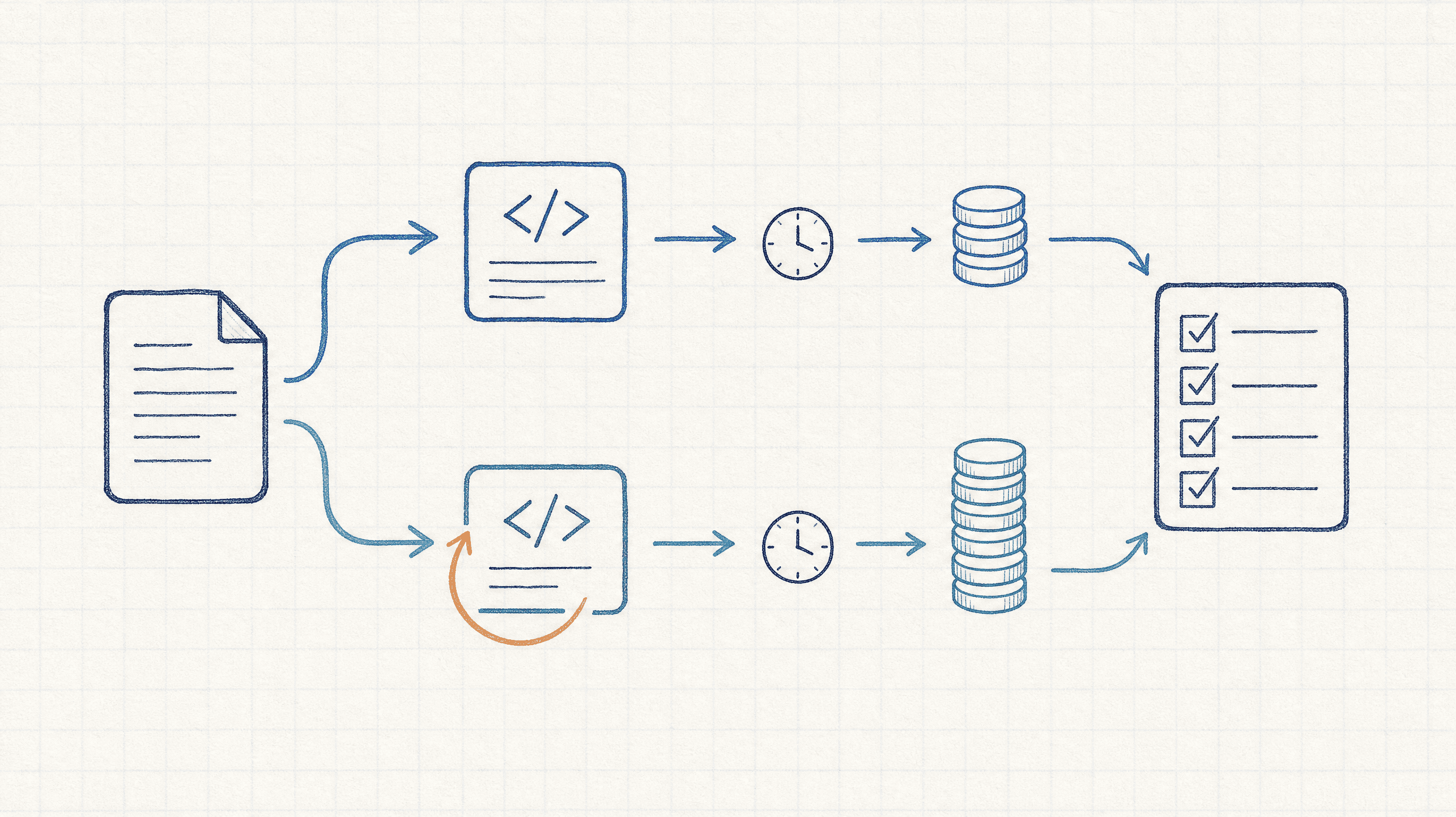
gemini-4-argon. - Compare on the same set of tasks: Pick 5–10 real tasks from your own repo (bug fixes, refactors, adding tests). For each model, record whether it passed on the first try, the number of retries, thinking tokens, and total cost.
- Set your switching thresholds: Write down thresholds for accuracy, per-task cost, and latency ahead of time, and don't change your production routing until they're met.
A minimal example of calling Argon (Python google-genai SDK; check the official What's new in Gemini 4 Argon docs for parameter names):
from google import genai
from google.genai import types

client = genai.Client()  # 读取 GEMINI_API_KEY

resp = client.models.generate_content(
    model="gemini-4-argon",
    contents="审查这个函数的并发问题:...",
    config=types.GenerateContentConfig(
        thinking_config=types.ThinkingConfig(thinking_level="medium"),
    ),
)
print(resp.text)
Create an API key and connect Claude Code in 5 minutes →
What to read next
- To split work between Opus 5.5 and Sonnet 5.5: Claude Sonnet 5.5 vs Opus 5.5
- To compare the flagship models from OpenAI and Anthropic: GPT-6.1 Sol vs Claude Opus 5.5
- To draw task boundaries between Claude Code, Codex, and Gemini: Jev model routing guide
What we're watching before we update this article
- Argon appearing on the AICodeWith model page:
gemini-4-argon - Price changes on the Gemini API pricing page around November 30
- Google releasing other models in the Gemini 4 family
- Independent third-party retests of Argon's coding ability on leaderboards
FAQ
How much does Gemini 4 Argon cost?
Through November 30, 2026, input is $2 per million tokens, output is $10 (including thinking tokens), and cache reads are $0.10. Starting December 1, those become $4, $20, and $0.20.
Can I use Gemini 4 Argon in Claude Code?
Claude Code uses the Anthropic protocol, and there's no official way to switch it directly to a Gemini model. A better approach is to use Opus 5.5 in Claude Code as your baseline and test Argon separately through the Gemini API.
Which is better at coding, Gemini 4 Argon or Claude Opus 5.5?
By Google's own published numbers, Opus 5.5 leads on long terminal-style tasks (Terminal-bench 4.0, FrontierSWE v2), while Argon leads on DeepSWE v1.1 and Vibe Code Bench. We recommend testing on your own repo.
Has Gemini 4 Argon been nerfed?
So far there's no evidence that it was downgraded after launch. The dispute centers on benchmark scores running higher than real-world experience, a claim Google has denied.
Can I use Gemini 4 Argon for free?
It isn't available on the free API tier or the Google AI Pro plan. Pro and Ultra subscribers can use it in the Gemini app and in AI Mode in Search.
Does AICodeWith support Gemini 4 Argon?
Not as of 2026-10-15, though Claude Opus 5.5 is live. We'll update the model page as soon as it's available.
Sign up now and get your API key →
Sources
- Google official blog: Gemini 4 Argon (2026-10-13)
- Gemini API: Gemini 4 Argon model page
- Gemini API: Pricing
- Gemini API: Long context
- Google DeepMind: Gemini 4 Argon model card
- Anthropic: Claude Opus 5.5
- Anthropic: Pricing
- The Verge: Google finally releases Gemini 4 Argon
- Machine Heart (机器之心): Google's Gemini 4 Argon goes live, with API prices cut 50% for a limited time
- Techzine: Opinions are divided on Gemini 4 Argon