GPT-6.2 Sol 是什么?官方价格 $2/$10、1.05M 上下文、基准与测评
OpenAI 在 2026 年 11 月 17 日(北京时间 11 月 18 日 01:54)发布了 GPT-6.2 Sol,定位是面向日常工作的高效主力模型。官方标准价每百万 tokens 输入 $2、缓存输入 $0.10、输出 $10,与 GPT-6.1 Sol 相同;上下文 1,050,000 tokens。本文把官方数据和第三方测评分开整理,并说明怎么接入。
AI Code With Blog
Model usage, API engineering and product practice around Model Reviews.

OpenAI 在 2026 年 11 月 17 日(北京时间 11 月 18 日 01:54)发布了 GPT-6.2 Sol,定位是面向日常工作的高效主力模型。官方标准价每百万 tokens 输入 $2、缓存输入 $0.10、输出 $10,与 GPT-6.1 Sol 相同;上下文 1,050,000 tokens。本文把官方数据和第三方测评分开整理,并说明怎么接入。

OpenAI 在 2026 年 11 月 17 日(北京时间 11 月 18 日 01:54)发布了 GPT-6.2 Astra,定位是面向最难项目的新一代前沿模型。官方标准价每百万 tokens 输入 $8、缓存输入 $0.40、输出 $40,比 GPT-6 Astra 的输入输出低 20%、缓存输入低 60%;上下文 1,050,000 tokens。本文把官方数据和第三方测评分开整理,并说明怎么接入。

腾讯混元在 2026 年 11 月 16 日发布了 Hy4 Flash。这是 Hy4 系列的高效日常模型,模型 id 是 hy4-flash,总参数 224B、激活 12B,1M 上下文。官方目录价每百万 tokens 输入 $0.07、输出 $0.281,国内 TokenHub 为输入 0.5 元、输出 2 元;11 月 30 日 12:00 前按目录价 5 折结算。本文整理官方规格和自测基准、目前能核对的第三方结果,以及怎么接入。

阿里云在 2026 年 11 月 16 日发布了 Qwen4-Max 正式版,并开放按量 API。这是 Qwen 4 系列的旗舰模型,模型 id 是 qwen4-max,1M 上下文。官方国际价每百万 tokens 输入 $1.50、输出 $4.50,国内百炼为输入 10 元、输出 30 元。本文整理官方规格和自测基准、Artificial Analysis 的第三方结果,以及怎么接入。

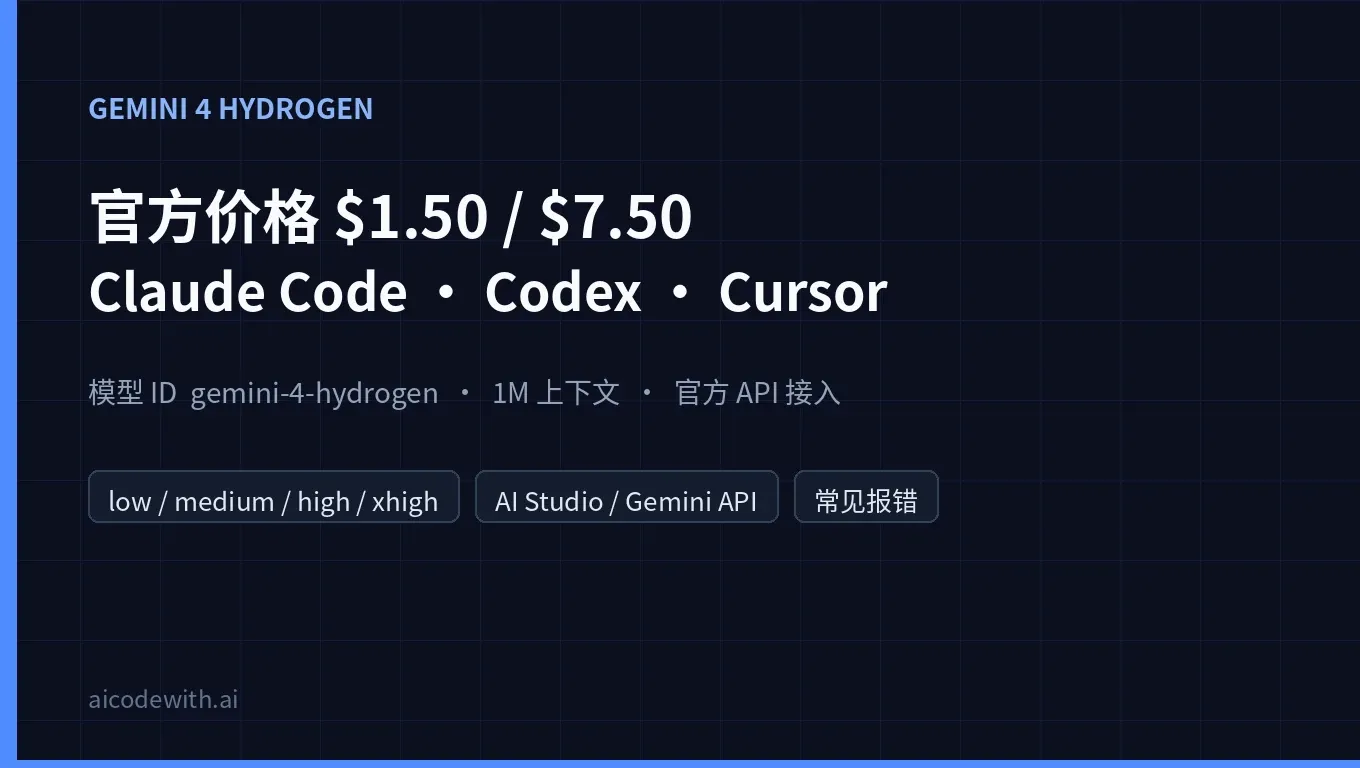
Gemini 4 Hydrogen is Google's efficiency model for everyday coding and agentic workflows, officially released on 12 November 2026 (US time). The model ID is gemini-4-hydrogen. Official Gemini Developer API standard pricing is $1.50 per million input tokens and $7.50 per million output tokens (including thinking tokens), with implicit caching at $0.075; the free tier lists those three as free of charge. This article covers official specs and pricing, how to connect it in AI Studio and the Gemini API, and how to write the client config in Claude Code, Codex, and Cursor.

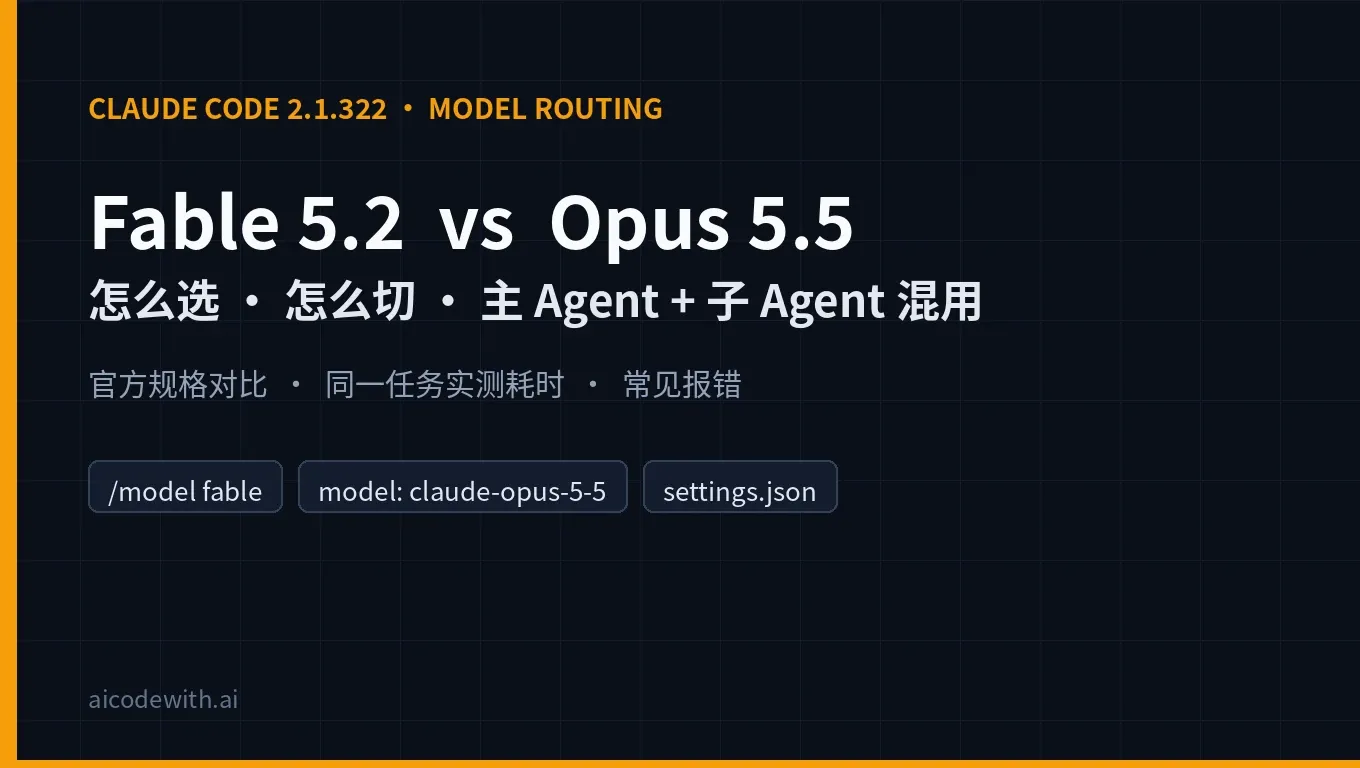
Claude Fable 5.2 or Opus 5.5? Start with an official spec and pricing comparison table, then learn how to switch between the two in Claude Code with /model, --model and settings.json, how to use a subagent's model field so the main agent runs Fable while subagents run Opus, and how to choose in Codex and Cursor. Includes timings and results from the same task run on both models with an AICodeWith key, plus fixes for common errors.

阿里云在 2026 年 11 月 11 日开放了 Qwen4-Max-Preview,这是 Qwen 4 系列的旗舰预览。模型 id 是 qwen4-max-preview,1M 上下文,只走 Token Plan,不提供按 token 按量付费,预览期到 11 月 25 日结束。本文只整理目前能核对的官方信息。

Google 在 2026 年 11 月 10 日向付费开发者开放了 Gemini 4 Carbon。它和 Gemini 4 Argon 同价:11 月 30 日前每百万 tokens 输入 $2、输出 $10,之后涨到 $4/$20,统一 1M 上下文。本文整理官方规格和自测基准、Artificial Analysis 与 LMArena 的第三方结果,以及怎么接入。

Meta 在 2026 年 11 月 9 日发布了 Muse Ember,定位是最小、最省的 Muse 模型,适合 Agent 里大量重复的工具调用、编码子任务和抽取。官方价每百万 tokens 输入 $0.10、输出 $0.50,上下文 1M。本文整理官方规格和自测基准、Artificial Analysis 的第三方结果,以及怎么接入。

Anthropic 在 2026 年 11 月 9 日发布了 Claude Fable 5.2,面向高难度编程和长周期 Agent 工作。官方价每百万 tokens 输入 $8、输出 $40,比 Fable 5.1 便宜 20%,上下文 1M。本文整理官方规格和自测基准,以及 Artificial Analysis、LMArena 和三份独立上手实测的第三方结果。

Tencent Hunyuan released Hy4 on November 4. It adds vision and computer use for the first time, has a 1M context window and up to 64K output, and is priced at $0.834 input, $2.501 output and $0.042 cached input per million tokens, with a 50% launch discount on OpenRouter. This guide covers the official specs, pricing, the benchmark numbers you can check in Tencent's own table, how to call the Hy4 API on Tencent Cloud TokenHub and OpenRouter (model IDs hy4 / tencent/hy4), and tested steps for using Chinese models in Claude Code and Codex.

美团在 11 月 1 日发布 LongCat-2.5,11 月 2 日开放 API:1.6T 总参数、约 48B 激活的原生多模态 MoE,主打长程 Agent 编程和视觉编程,1M 上下文,限时价每百万 tokens 输入 $0.30、输出 $1.20。本文把官方基准和第三方实测分开整理,讲清它强在哪、哪里还不稳,以及怎么接入 Claude Code 等 Agent 工具。

DeepSeek Harness 团队在 10 月 31 日发布《Super-agent 设计探索》并开源 MIT 原型 dsh-superagent。它不是新模型,也不是正式产品。本文整理官方架构和实验数据、原型怎么部署、我们自己的安装测试,并在 11 月 1 日补充了多份第三方实测:从 Issue 跑到 PR 的社区报告、安装踩坑记录和一份独立安全审计。

OpenAI 在 10 月 26 日发布了 GPT-6.1 Terra,官方价每百万 tokens 输入 $1、输出 $5,比 GPT-5.6 Terra 和 GPT-6.1 Sol 便宜一半,上下文 1.05M,主打视觉推理和电脑操作。本文把官方数据和第三方测评分开整理,讲清它适合做什么、什么时候该换 Sol,以及怎么接入。

On October 6, Mistral released the public preview of Mistral Large 4, nicknamed Le Chonk. It is the company's largest model to date: 1.05T total parameters, 52B active, native multimodal, and 1M context. Official pricing is $1.36 per million input tokens and $4.18 per million output tokens, with weights planned to open up at the end of October. This post collects official and third-party benchmarks, the strengths and weaknesses from developer hands-on tests, and how to call it.

Moonshot released Kimi K3.1 Pro on October 23. Official pricing is $2 per million input tokens and $10 per million output tokens, with a high-speed tier at $4/$20 and a 1M context window. This post covers the official specs and self-reported benchmarks, third-party results from Artificial Analysis and OpenRouter, strengths and weaknesses, use cases, and how to call it.

On October 15, Meta released the weights for Muse Spark Open: an 816B-parameter MoE with 42B active, a 1M context window, and support for image, audio, and video input. It isn't available on Meta's own API, so you either self-host or go through a hosting provider, where pricing is $1.25 per million input tokens and $4.25 per million output tokens. This article covers the license restrictions, official and third-party benchmarks, hardware requirements, and hands-on results.

Meta released Muse Wonder on October 12, alongside Muse Wonder Full, which is only available through a Muse Code subscription. The API version, muse-wonder-1.0, is officially priced at $4 per million input tokens and $20 per million output tokens, the same as Claude Opus 5.5, with a 1M context window. This post covers how the two versions differ, official and third-party benchmarks, the strengths and weaknesses seen in hands-on testing, and how to call it.

MiniMax released M3.1 Flash on October 19, and Space Bunny, the anonymous model on OpenRouter, was an early version of it. Official pricing is $0.15 per million input tokens and $0.60 per million output tokens, with a 1M context window. This article covers the official specs and self-reported benchmarks, third-party results from Artificial Analysis and LMArena, the strengths and weaknesses community testers found, and how to tune thinking depth to save money.

Gemini 4 Argon became generally available on October 13. This article checks the official pricing, the unified 1M context, and the benchmark results, compares it with Claude Opus 5.5, and explains how to connect it in Claude Code, Codex, and the API.

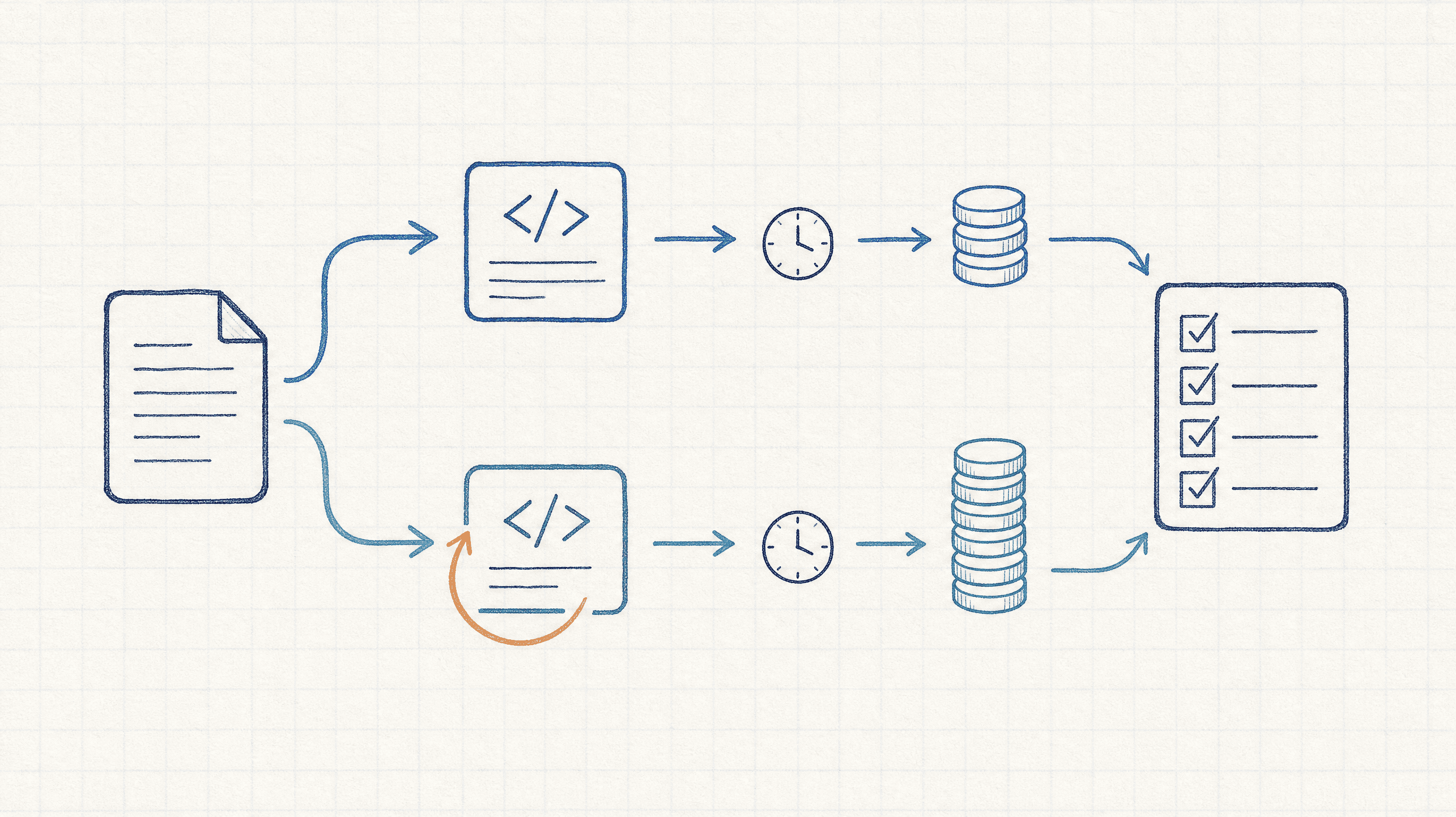
Compares Claude Sonnet 5.5 and Opus 5.5 on everyday coding, complex investigations, current cache pricing, and channel fees, and explains how default effort, thinking, and failure-escalation strategy affect your choice.

A comparison of GPT-6.1 Sol and Claude Opus 5.5 on coding tasks, official and channel pricing, long-context billing, and tool interfaces. Choose a model based on acceptance results and full cost.

Claude Haiku 5.5 is out. See how its capabilities, pricing, and tokenization differ from Haiku 4.5, decide which coding tasks are worth upgrading, and check the migration requirements for thinking, response parsing, and existing conversation history.